

Move your best customers off public platforms into owned channels
WhatsApp groups and Discord servers with 90% open rates beat Instagram's 2% engagement, creating direct access to people who actually spend money at your venue.Stop paying influencers for access, start paying creators for content
Hiring local creators to make authentic content for your channels costs less and performs better than renting an influencer's audience that rarely converts.Turn your venue into the clubhouse for non-food activities
Running clubs, chess nights, and pottery workshops guarantee packed houses on slow nights whilst building fierce loyalty through community connection.Focus on keeping your best 100 customers rather than finding 10,000 new ones
With acquisition costs now exceeding average first-visit spend, profitability depends entirely on retention and increasing customer lifetime value.Collaborate with non-food brands to borrow their cool and swap audiences
Partnering with local fashion stores, art studios, or record shops costs nothing but delivers highly targeted local customers who actually visit.
The Death of Algorithm Marketing
Remember when restaurant marketing was simple? Post a nice photo of your food, buy some Facebook ads, maybe work with a local food blogger, and watch customers arrive. Those days are gone, and they're not coming back.
Here's the brutal truth: it now costs restaurants 80 to 100 pounds in advertising to attract a single new customer who might spend 50 pounds once. Do the maths on that for a moment. You're literally paying people to eat at your restaurant, then losing money when they do. Customer acquisition costs have risen 300 percent since 2022, whilst the organic reach of your carefully crafted Instagram posts has collapsed to basically nothing. Unless you pay to boost that beautiful flat white photo, maybe 2 percent of your followers will ever see it.
The influencer game has become equally ridiculous. That food blogger with 50,000 followers wants a four-figure fee to post about your restaurant. Sounds impressive until you realise their audience is scattered across continents. Maybe 50 people who follow them actually live within walking distance of your venue. You're essentially paying premium prices to advertise to people who will never visit.
But whilst everyone else panics about declining engagement rates and rising ad costs, the smartest operators have quietly walked away from the whole game. They've realised something profound: the problem isn't their marketing strategy. The problem is that the entire model of interrupting strangers with advertisements has stopped working. People have trained themselves to scroll past anything that looks like marketing. They've installed ad blockers, unfollowed brands, and moved their real conversations into private spaces where algorithms can't reach them.
Where Your Customers Actually Went
Your customers haven't disappeared. They've just moved somewhere you can't see them. Over 80 percent of sharing now happens in what the industry calls "dark social" spaces: WhatsApp groups, Discord servers, private messages, the group chats where people actually trust what they read. When someone wants a restaurant recommendation, they don't search Instagram. They ask their WhatsApp group.
This isn't a trend you can ignore. It's a complete migration of trust from public to private spaces. People check their group chats first thing in the morning and last thing at night. They trust their friends' opinions, not sponsored posts. The question isn't whether to follow them into these spaces, but how to do it without feeling like an intruder.
The answer is surprisingly simple: stop acting like a marketer and start acting like a member. Create a WhatsApp channel for your regulars. Not for broadcasting promotions, but for genuine insider access. "Just tapped a rare Belgian beer, thought you'd want to know" or "Chef's testing a new dish tonight, fancy being a guinea pig?" These aren't marketing messages; they're the kind of texts you'd send to a friend.
Put a QR code on receipts that says "Join our inner circle on WhatsApp" with a genuine hook. Maybe it's first access to Friday night reservations. Perhaps it's notification when you get that wine everyone's been asking about. The specifics matter less than the principle: you're inviting people into a conversation, not adding them to a broadcast list. Once they're in, you have direct access with 90 percent open rates. Compare that to the 20 percent who might open your email newsletter or the 2 percent who see your Instagram posts.
Why You Should Stop Paying Influencers (And What to Do Instead)
Let's talk about that influencer you're thinking of hiring. They want how much? For one post? That disappears after 24 hours if it's a story? And reaches an audience where maybe 1 percent could actually visit your restaurant?
There's a better way, and it's embarrassingly obvious once you see it. Instead of paying influencers for access to their audience, pay creators to make content for your own channels. Think about what you actually get from each approach. The influencer gives you one post on their feed that quickly gets buried. The creator gives you ten videos you own forever, can use anywhere, and that actually show your real venue to your actual local market.
The aesthetic has completely shifted too. That glossy, perfectly lit content that marketing agencies love? Everyone knows it's an ad. What works now is deliberately rough around the edges. Shaky phone footage of your chef having a minor meltdown during service. Your bartender's genuine laugh at a terrible joke. The beautiful chaos of your dining room on a packed Friday night. This deliberately imperfect content performs better because in a world drowning in AI-generated perfection, imperfection proves authenticity.
Find local photographers, videographers, food lovers who already eat at your venue. Pay them to capture what actually happens, not some fantasy version. Give them freedom to shoot the real experience: the controlled chaos of your kitchen, the server who knows everyone's name, the regular who's been coming since you opened. This content costs a fraction of influencer campaigns but delivers far better results because it's real, it's yours, and it actually represents what people will experience when they visit.
Building Communities That Happen to Meet at Your Restaurant
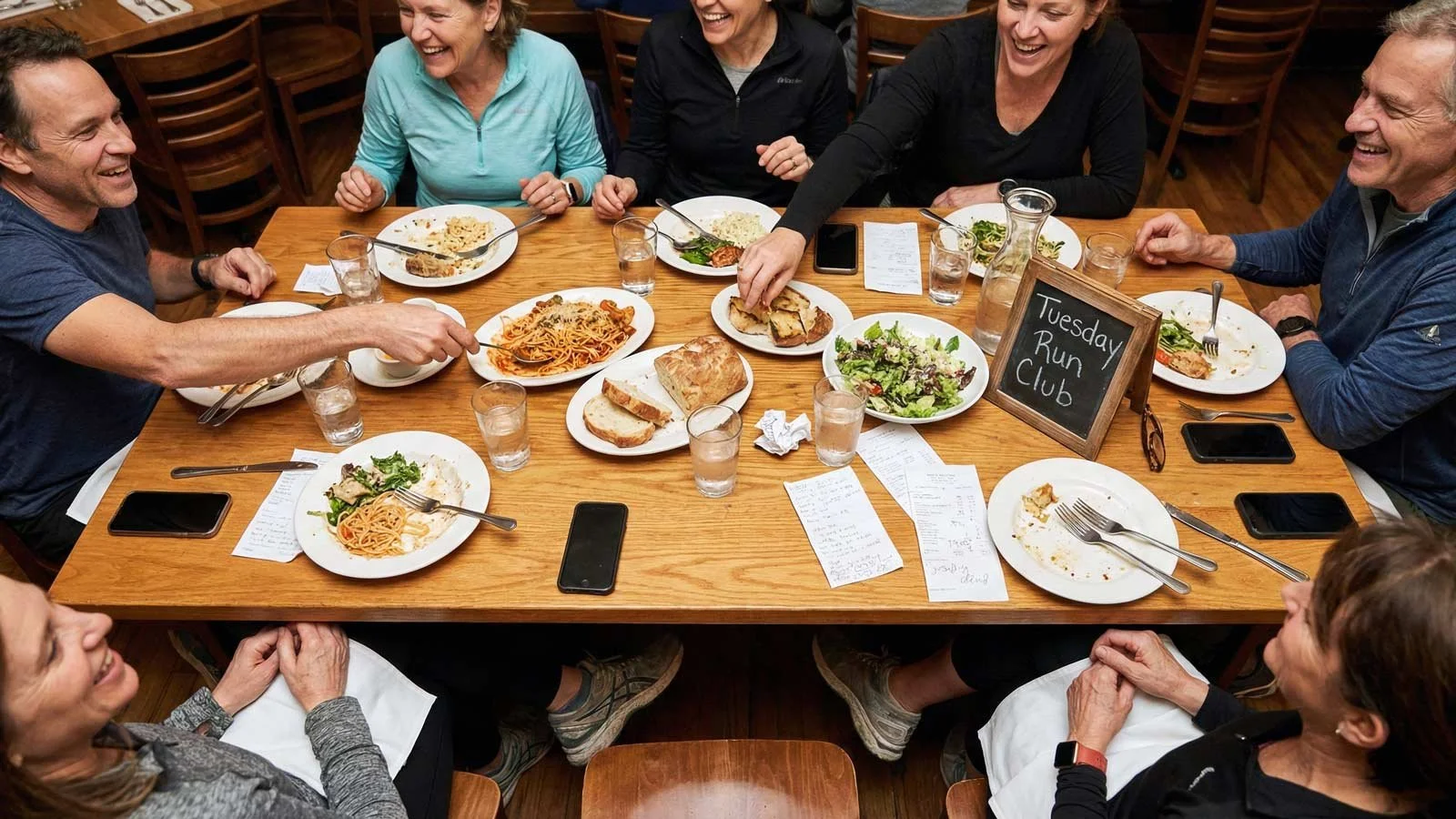
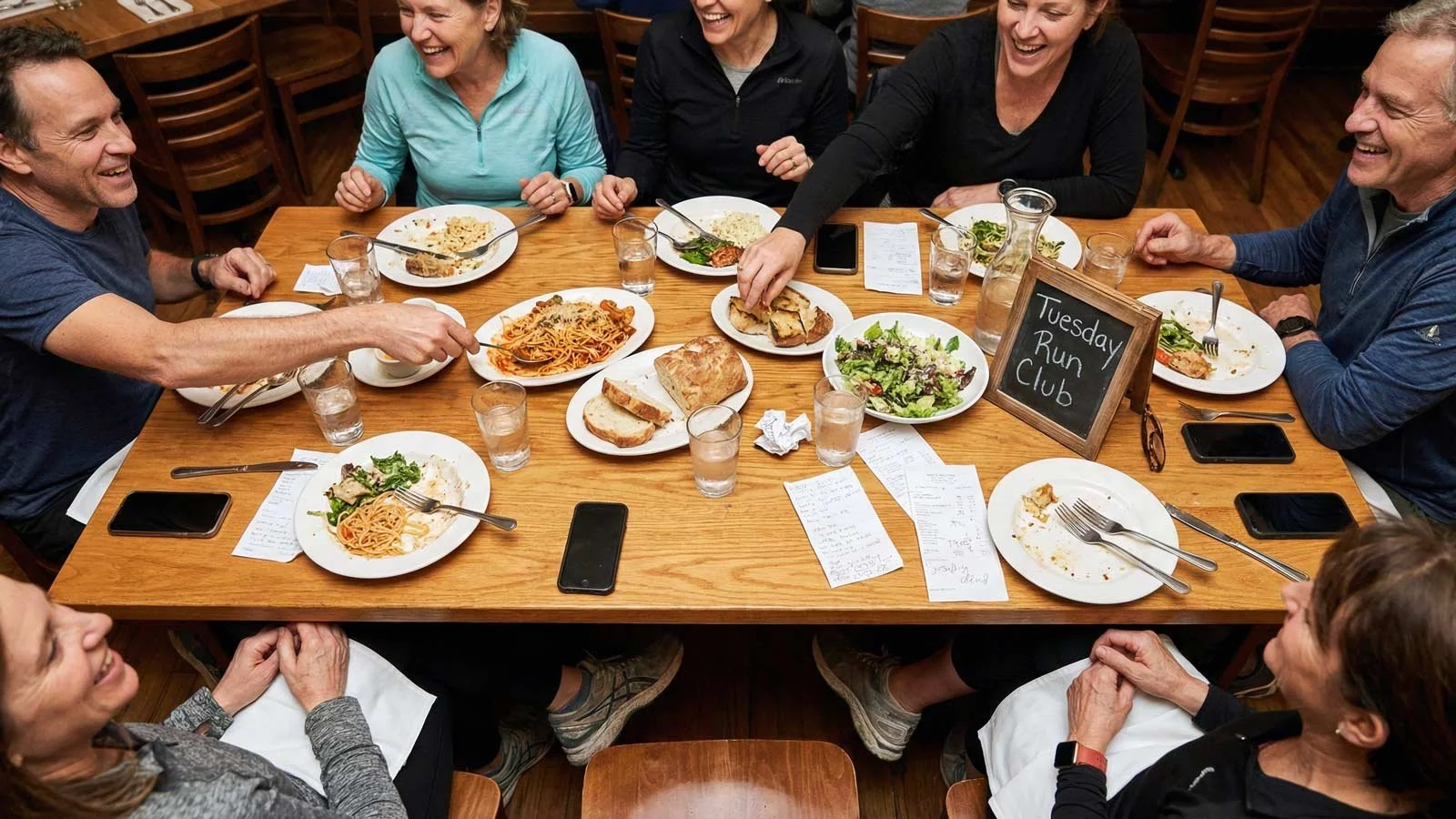
Here's the most successful marketing strategy for restaurants in 2026, and it has absolutely nothing to do with food: host a run club every Tuesday. Or a chess night every Thursday. Or a monthly pottery workshop. These aren't events. They're communities that happen to use your venue as their clubhouse.
The psychology makes perfect sense once you think about it. People are desperate for connection but find traditional networking events painfully awkward. "Hi, I'm Steve, I work in finance" isn't how friendships start. Activities remove that social friction. You don't have to make small talk with a stranger; you just have to run next to them. The activity provides the excuse for gathering, your venue provides the reward afterward, and suddenly you've got 40 guaranteed covers every slow Tuesday from runners who need post-workout fuel.
This solves what sociologists call the "third place crisis." With remote work keeping people at home and offices disappearing, people have lost their third place, that community space that isn't work or home. Venues that position themselves as community hubs rather than just restaurants are winning because they're solving a human need, not just a hunger problem.
Starting a run club requires minimal investment but total commitment. Partner with a local running coach or enthusiastic regular to lead the group. Provide a safe space for bags and belongings. Create a special menu or discount for participants. Within months, your deadest night becomes your most profitable, and those runners become fierce advocates who bring friends, family, and colleagues even when they're not running. They're not just customers anymore; they're members, and membership is much stickier than customer loyalty.
Making Merch People Actually Want to Wear
Forget those branded t-shirts that end up as gym clothes. The venues succeeding with merchandise are creating pieces people genuinely want to wear in public, collaborating with local artists and treating merch drops like fashion releases rather than afterthoughts.
When someone wears your neighbourhood wine bar's hoodie, they're not just keeping warm. They're signalling taste, locality, insider knowledge. They're saying "I know about this place, and knowing about this place makes me interesting." But this only works if the merch is genuinely good. Not just your logo slapped on a cheap shirt, but considered design that works as fashion independent of your branding.
Partner with local designers for limited runs of genuinely interesting pieces. Drop collections rather than maintaining constant inventory. Create scarcity and desire rather than having boxes of unsold shirts in your office. The economics make sense too: a quality hoodie might cost 30 pounds to produce and sell for 75. That's 45 pounds profit plus a walking advertisement for years. Compare that to an Instagram ad that costs the same but disappears after a week.
Think beyond clothing. Custom ceramics for your coffee programme. Limited hot sauce batches for your fried chicken. Collaborative vinyl releases with DJs who play at your venue. These become collectibles that deepen customer connection whilst generating revenue. They transform your restaurant from somewhere people eat into a brand worth collecting.
The Mathematics of Keeping Customers vs. Finding New Ones
Traditional marketing obsesses over reaching new people. How many impressions? How many clicks? How many first-time visitors? But when it costs 100 pounds to acquire a customer who spends 50 pounds once, that obsession leads to bankruptcy.
The maths of 2026 demands a complete inversion of this thinking. Forget finding new customers. Obsess over the ones you already have. A regular who visits twice monthly is worth 1,200 pounds annually. To match that revenue through new customer acquisition would cost 2,400 pounds in advertising to attract 24 one-time visitors. The choice is obvious: nurture the whale rather than fishing for minnows.
This means fundamentally restructuring how you allocate resources. Take that monthly advertising budget and use it to surprise and delight existing customers. Empower your staff with discretionary budgets to comp dishes for regulars just because. Send handwritten thank you notes to your top customers. Create experiences that make people feel valued rather than marketed to.
The results are predictable and powerful. Increasing customer retention by just 5 percent can boost profitability by 25 to 95 percent. Yet most venues still chase the sugar high of new customers whilst ignoring the steady sustenance of regulars. They celebrate gaining 100 new Instagram followers whilst losing three weekly regulars. The followers might look good on a report, but the regulars pay the bills.
Looking Forward
The marketing revolution of 2026 isn't really about marketing at all. It's about recognising that the old model of interrupting strangers with messages has become both ineffective and uneconomical. The platforms want you to pay more for less. The influencers want bigger fees for smaller returns. The algorithms have become slot machines where the house always wins.
What actually works now feels almost quaint in its simplicity. Build genuine communities around your venue. Have real conversations in private spaces where people actually see your messages. Create reasons for people to gather that transcend food. Make things worth owning. Treat the customers you have like gold rather than constantly chasing ones you don't.
This shift requires courage because it means abandoning metrics that impress investors but don't pay bills. Your WhatsApp group with 500 local members beats 50,000 Instagram followers if those 500 actually show up. Your Tuesday run club that packs your venue beats a viral TikTok that brings tourists once. Your limited merch drop that sells out in a day beats a Facebook ad campaign that nobody remembers.
The venues thriving in 2026 have stopped trying to go viral and started building fandoms. They've stopped renting audiences and started owning relationships. They've recognised that in a world of infinite content and zero attention, the only marketing that works is the kind that doesn't feel like marketing at all.
Ready to prepare your next business for lasting success?
Contact us to explore how strategic consulting support might enhance your hospitality business performance. Reach out for a no-obligation consultation about developing an approach that drives sustainable success.
Marcus Treamer brings over 25 years of experience transforming hospitality businesses across Asia's most competitive markets. Now based in Koh Samui, whilst maintaining strong international ties, he combines strategic marketing expertise with deep operational understanding to help venues realise their full potential.